
Peace Never Dies: Pakistan’s Call for Dialogue in a Time of War
By Junaid Qaiser
The latest escalation between the United States and Iran has once again reminded the world how quickly fragile peace can give way to renewed confrontation. Missiles have crossed borders, military installations have come under attack, and the Strait of Hormuz — one of the world's most critical energy corridors — has become the focal point of a dangerous geopolitical standoff. As tensions rise and the rhetoric of retaliation dominates headlines, Pakistan's message stands out for its clarity and wisdom: peace never dies.
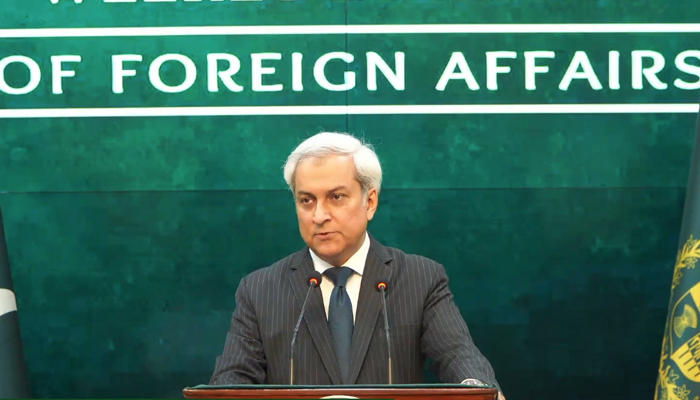
Speaking at a weekly briefing, Foreign Office spokesperson Tahir Andrabi urged all parties to exercise maximum restraint and return to dialogue. His remarks came at a time when military exchanges between Washington and Tehran have intensified, threatening not only regional stability but also global economic security. Yet amid the growing uncertainty, Islamabad's position reflects a reality that history has repeatedly demonstrated: wars may begin on battlefields, but they end at negotiating tables.
The renewed hostilities are particularly disappointing because they come only weeks after a significant diplomatic breakthrough. Last month's Islamabad Memorandum of Understanding (MoU), facilitated through Pakistan's diplomatic engagement, provided a framework for de-escalation between the United States and Iran. The agreement established a sixty-day ceasefire, outlined steps toward reopening the Strait of Hormuz, and created a roadmap for further negotiations regarding Iran's nuclear programme and broader regional security concerns.
At the time, the agreement was widely viewed as a rare diplomatic success in a region too often defined by conflict. It demonstrated that even deeply entrenched adversaries could find common ground when faced with the prospect of prolonged instability. The fact that hostilities have resumed does not diminish the importance of that achievement. Rather, it highlights the difficult and often uneven nature of peacebuilding.
Diplomacy is rarely a straight path. Most successful peace processes endure setbacks before reaching their objectives. Ceasefires are violated. Trust breaks down. Political pressures intensify. Yet the alternative — endless cycles of retaliation — ultimately proves far more costly. This is why Andrabi's assertion that the "logic of the Islamabad MoU still exists" deserves serious consideration.
The reality is that neither Washington nor Tehran can achieve a lasting solution through military force alone. The United States may possess overwhelming military capabilities, but it cannot eliminate the political and strategic realities that shape Iran's behaviour. Similarly, Iran can demonstrate resilience and retaliatory capacity, but it cannot indefinitely sustain confrontation without severe economic and diplomatic consequences. Both sides eventually confront the same conclusion: dialogue remains the only sustainable path forward.
Pakistan's role in this process is particularly noteworthy. For decades, Islamabad has advocated peaceful resolution of disputes through diplomacy and engagement. In recent months, Pakistan emerged as an important intermediary, facilitating communication channels at a time when direct engagement between the United States and Iran was limited. This role reflects Pakistan's growing diplomatic relevance and its ability to maintain constructive relations across a diverse range of regional and international actors.
Critics may question whether middle powers can meaningfully influence conflicts involving major states. Yet modern diplomacy increasingly relies on trusted intermediaries capable of bridging political divides. Countries such as Pakistan, which maintain relationships with multiple stakeholders, often provide valuable avenues for communication when official channels become strained. The Islamabad MoU itself stands as evidence of what persistent diplomacy can accomplish.
The stakes involved extend far beyond the immediate parties to the conflict. The Strait of Hormuz remains one of the world's most important maritime routes, carrying a significant share of global energy supplies. Any disruption to shipping through this narrow waterway has consequences that ripple across continents.
The impact is already being felt. Oil prices have surged in response to renewed uncertainty, creating concerns about inflation and economic instability. Developing countries, particularly those in the Global South, are among the hardest hit. Nations with limited financial resources often struggle to absorb sudden increases in energy costs, which inevitably affect transportation, food prices, manufacturing, and overall economic growth.
Pakistan is no exception. Rising international oil prices place additional pressure on an economy already navigating multiple challenges. Higher fuel costs affect ordinary citizens through increased transportation expenses and rising prices for essential goods. What happens in the Gulf therefore has direct consequences for households thousands of kilometres away.
This broader economic dimension underscores why de-escalation is not merely a regional concern but a global necessity. Stability in the Gulf supports international trade, energy security, and economic growth. Conversely, prolonged conflict threatens supply chains, maritime navigation, and financial markets around the world.
Recognising these realities, Pakistan has continued its diplomatic engagement with regional stakeholders. Prime Minister Shehbaz Sharif's discussions with leaders in Qatar and Iran, alongside Foreign Minister Ishaq Dar's contacts with key regional counterparts, demonstrate Islamabad's commitment to preserving the gains achieved through dialogue. These efforts reflect a consistent foreign policy approach centred on mediation, engagement, and conflict resolution.
Importantly, Pakistan's position is not based on choosing sides. Rather, it is grounded in the principle that peace serves the interests of all parties. A wider conflict would benefit no one. Gulf states risk becoming theatres of confrontation. Global markets face further instability. Ordinary citizens throughout the region would bear the human and economic costs of prolonged hostilities.
History shows that the logic of escalation eventually reaches its limits. Military campaigns become increasingly expensive. Strategic objectives grow more difficult to achieve. Domestic and international pressures mount. Sooner or later, leaders recognise that dialogue offers opportunities that conflict cannot.
This is why the notion that "peace never dies" carries profound significance. Peace is not simply the absence of violence; it is an ongoing process sustained by diplomacy, communication, and political will. Even when negotiations stall, the foundations for future engagement often remain intact. Agreements may be challenged, but their underlying principles endure.
The Islamabad MoU represents such a foundation. While current circumstances have complicated its implementation, the framework itself remains relevant. It offers a practical template for reducing tensions, rebuilding confidence, and addressing the substantive issues that continue to divide Washington and Tehran.
The coming weeks will be critical. Continued escalation risks drawing additional regional actors into the conflict and deepening economic disruptions worldwide. Yet opportunities for diplomacy still exist. Communication channels remain open. Regional mediators continue their efforts. Most importantly, neither side has completely closed the door to future negotiations.
For Pakistan, the path forward is clear. The country must continue advocating restraint, encouraging dialogue, and supporting every credible effort aimed at restoring peace. Such a role is consistent with Pakistan's diplomatic traditions and serves both regional and international interests.
The world today does not need more missiles crossing borders or more threats exchanged through press statements. It needs leaders willing to recognise that sustainable security cannot be built through perpetual confrontation. It requires the courage to return to the negotiating table even after setbacks and disappointments.
As the conflict enters another dangerous phase, Pakistan's message deserves attention. The noise of war may temporarily drown out the voices of diplomacy, but it cannot silence them forever. Conflicts eventually exhaust themselves. Escalation reaches its limits. And when that moment arrives, nations return to the only place where lasting solutions are found.
The negotiating table remains waiting. The framework for peace still exists. The opportunity for dialogue endures.
Because peace never dies; it simply waits for leaders to choose it once again.
No comments yet.